DNAnexus, the leader in cloud-based genome informatics and data management, today announced that the company was awarded a research and development contract by the U.S. Food and Drug Administration’s Office of Health Informatics to build precisionFDA, an open source platform for community sharing of genomic information.
Researchers at the University of Illinois at Chicago and Northwestern University have engineered a tethered ribosome that works nearly as well as the authentic cellular component, or organelle, that produces all the proteins and enzymes within the cell. The engineered ribosome may enable the production of new drugs and next-generation biomaterials and lead to a better understanding of how ribosomes function.
Study finds that arteries adapt to oxidative stress caused by aging Although the causes of many age-related diseases remain unknown, oxidative stress is thought to be the main culprit. Oxidative stress has been linked to cardiovascular and neurodegenerative diseases including diabetes, hypertension and age-related cancers. However, researchers at the University of Missouri recently found that aging actually offered significant protection against oxidative stress. These findings suggest that aging may trigger an adaptive response to counteract the effects of oxidative stress on blood vessels.
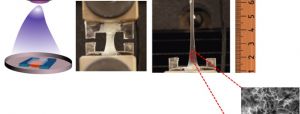
A team of bioengineers at Brigham and Women’s Hospital (BWH), led by Ali Khademhosseini, PhD, and Nasim Annabi, PhD, of the Biomedical Engineering Division, has developed a new protein-based gel that, when exposed to light, mimics many of the properties of elastic tissue, such as skin and blood vessels. In a paper published in Advanced Functional Materials, the research team reports on the new material’s key properties, many of which can be finely tuned, and on the results of using the material in preclinical models of wound healing.
Chronic pain caused by the nerve damage of type 2 diabetes, surgical amputation, chemotherapy and other conditions is especially intractable because it resists painkilling medications.
A study showed that scientists can wirelessly determine the path a mouse walks with a press of a button. Researchers at the Washington University School of Medicine, St. Louis, and University of Illinois, Urbana-Champaign, created a remote controlled, next-generation tissue implant that allows neuroscientists to inject drugs and shine lights on neurons deep inside the brains of mice. The revolutionary device is described online in the journal Cell. Its development was partially funded by the National Institutes of Health.
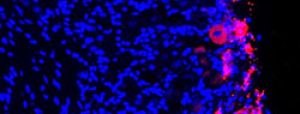
Anti-cancer strategies generally involve killing off tumor cells. However, cancer cells may instead be coaxed to turn back into normal tissue simply by reactivating a single gene, according to a study published June 18th in the journal Cell. Researchers found that restoring normal levels of a human colorectal cancer gene in mice stopped tumor growth and re-established normal intestinal function within only 4 days. Remarkably, tumors were eliminated within 2 weeks, and signs of cancer were prevented months later. The findings provide proof of principle that restoring the function of a single tumor suppressor gene can cause tumor regression and suggest future avenues for developing effective cancer treatments.
Broad Institute of MIT and Harvard is teaming up with Google Genomics to explore how to break down major technical barriers that increasingly hinder biomedical research by addressing the need for computing infrastructure to store and process enormous datasets, and by creating tools to analyze such data and unravel long-standing mysteries about human health.